The Difficulty of Trusting in God

And it came to pass after these things, that God did tempt Abraham, and said unto him, Abraham: and he said, Behold, here I am. And he said, Take now thy son, thine only son Isaac, whom thou lovest, and get thee into the land of Moriah; and offer him there for a burnt offering upon one of the mountains which I will tell thee of. And Abraham rose up early in the morning, and saddled his ass, and took two of his young men with him, and Isaac his son, and clave the wood for the burnt offering, and rose up, and went unto the place of which God had told him. (Genesis 22:1-3)SacrificeAbraham

A lot has been said about this story. It brings up some ethical questions. No matter how we approach this story, it is still a very difficult and disturbing story. It goes against everything we know and understand about God. I guess all these questions are important for us to ponder about. The challenge of this story is whether we should put a limit in trusting God. This is really the thrust of this story. Abraham had all the right reasons to say enough is enough. After all, it was not his idea that he should be the father of all nations. It was not his idea to have Isaac. He was happy with Ishmael but God wanted his heir to be born of Sarah. It was all God’s idea and now, God demanded the ultimate sacrifice. Most of us in Abraham’s situation would not have done it. However, most of us are not in Abraham’s situation. Abraham gave up everything to follow God’s promise. Abraham was the kind of disciple that Jesus demands, “If anyone comes to Me and does not hate his father and mother, wife and children, brothers and sisters, yes, and his own life also, he cannot be My disciple”. (Luke14:26)

I am not sure how many Christians can compare themselves with Abraham. However, most of us have been in situations where we needed to trust God even though it seems frightening and the possibility of losing everything that we treasure is at stake. God asked Abraham to sacrifice everything that gave him a sense of meaning in this life.  How was Abraham able to do it? Most of us cannot say honestly that we would be able to do what Abraham did. Most of us would have just given up and gone home. Abraham did not falter. The Bible does not tell us about the anxiety and anguish that Abraham felt as he journeyed to the place of sacrifice. It was not necessary. None of us ever want to be in his shoes because we exactly know what it would be like.

Abraham’s sacrifice has been the focus of my meditation recently because we are waiting for God to act for our return to Brazil. One of the challenges of being a missionary is dealing with bureaucracy. We have to apply for our missionary visa and we need two official documents of sponsorship from a Brazilian religious entity. Usually this is a straightforward process but nothing really is straightforward when you are dealing with bureaucracy. Everything is being delayed for one or reason other and now we are just waiting. We have been waiting to return to Brazil since the end of May. In the process of waiting, it feels like nothing is happening. The idle mind is a fertile ground for doubts. We are assailed by thoughts of insecurities and like most of people, we want to be in control. It doesn’t take long for us to realize that there is no way we can ever control this situation. God is the only who can act and we need to give it up to Him. Only God can make it go in the right direction and the problem is whether we can trust Him to do it.

The writer of Hebrews states, “By faith Abraham, when he was tested, offered up Isaac, and he who had received the promises offered up his only begotten son, of whom it was said, “In Isaac, your seed shall be called,”concluding that God was able to raise him up, even from the dead.”(Hebrews11:17-18)

Abraham was able to offer his dream child to God because he understood that only God can fulfill our dreams. Even when allowing God means handing everything over to Him, it does not mean that it is the end of a dream. Abraham knew that Isaac belonged to God and God is able to do the impossible. Abraham trusted God in a way that very few of us would be able to do. When I read his story, I felt a little embarrassed. I am waiting for something that could easily be resolved. God is not asking me to give a dream but to trust him for the visa. Abraham trusted God in something which seems to be contrary very decent fibre of one’s being. Yet Abraham did not do it out of blind faith. He did it because he understood that without God, life would be meaningless for him. Isaac would fail to bring him the joy that he desire if he was not able to see the God who made Isaac a reality.

The problem with trusting God is not knowing what do to exactly. I fluctuated between being a fatalistic Christian or a manipulative one who tries to organize the outcome of everything. Both attitudes are obviously wrong. I am beginning to see that trusting God involves figuring what is God’s role and my role. So many times we try to be God that we forget what to do when we are not trying to be God. Trusting and waiting is the process of discovering my role and allowing God to be God. It is actually a process of discovering freedom. Abraham discovered the joy and freedom of knowing that all hopes and dreams do not rest on Isaac but the creator of Isaac. We hope to do the same. Please pray with us as we discover this. Pray also that our visa process will come through in God’s timing and that we would have the patience and wisdom to allow it to be so.

Share Button

Introductions

This is an entry I wrote for a blog: Murder is Everywhere. It is a blog hosted by several crime novelists and they each focus on one specific country and write articles regarding it. I was invited to write this article by Leighton Gage who writes several crime novels based in Brazil. His books are all in English and they contain profound insights on social and cultural issues in Brazil. I would recommend reading some of his articles on Brazil (link is on the side). Leighton Gage is presently taking a break from writing as he is fighting cancer. Please pray for him. He and his Brazilian wife reside in Ocala, Florida. The introduction to this article is written by Leighton Gage.

 Among the Street Kids of São Paulo


2013-01-13 02.48.30

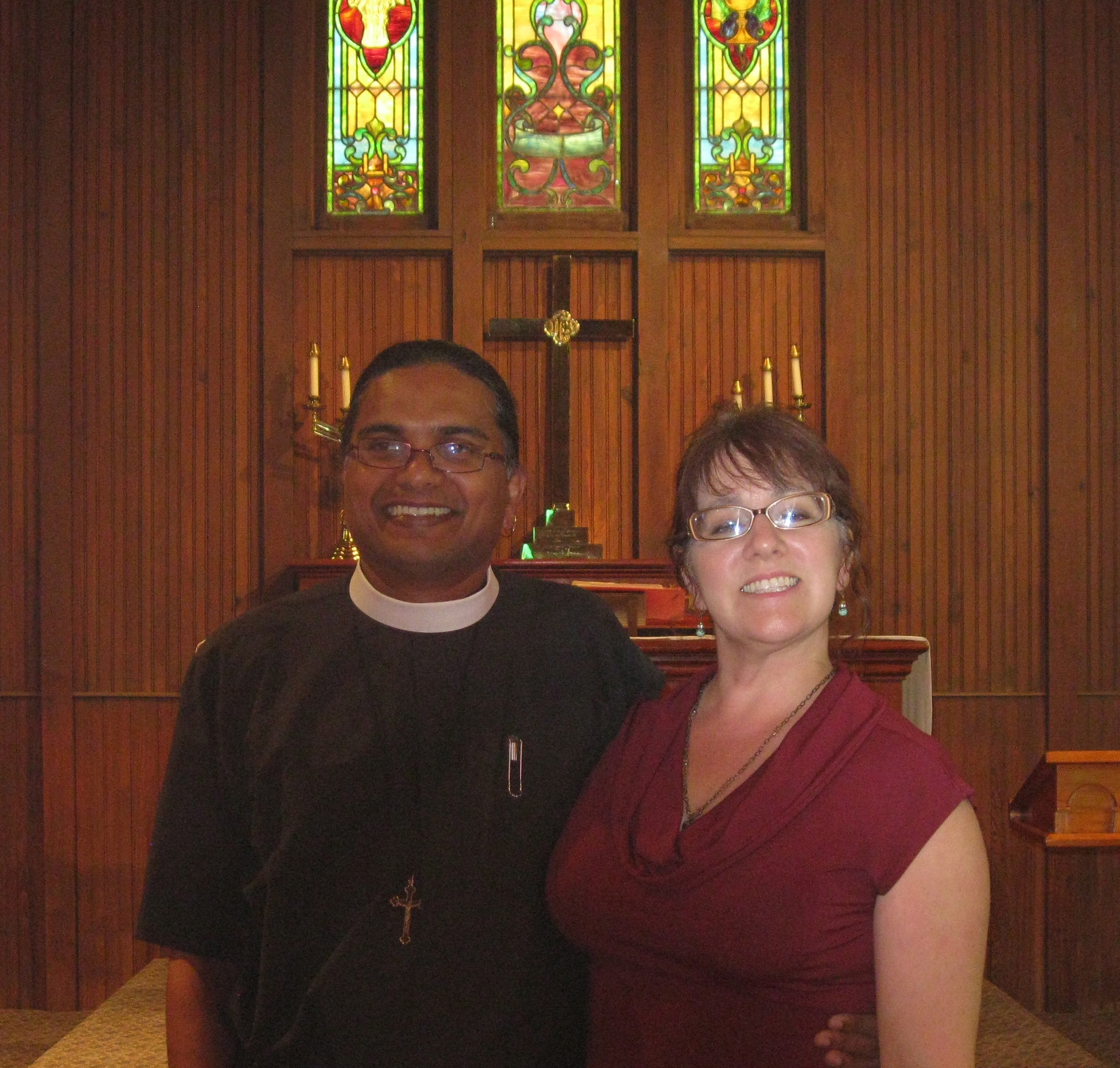
Stephen Dass hails from Singapore; his wife, Mary, from the United States. They’re missionaries, people who have found their vocation, and their fulfillment, among the street kids of the Southern Hemisphere’s greatest metropolis – São Paulo.

10 year old child


Among their photos, here is one I found particularly touching:


Um pobre

The words on the wall are part of a longer text, some kind of slogan, but “um pobre” can also be taken to mean “one of the poor”. Like their photos, the tales the couple has to tell are often heartbreaking, but often, too, illuminated by rays of hope.

Here’s Stephen with one of them.

Veronica

Veronica was seven years old when she ran away from the shambles of her nuclear family. Her mother was a sex worker. She attempted to abandon Veronica immediately after giving birth to her, but was hit by a car as she was leaving the hospital. Veronica knows her birth mother only because of this incident. Her mother survived the accident but she never was a mother to Veronica. Veronica told us that the only positive memory she has of her mother was that one Christmas she gave her a pear.

Veronica’s family festered with dysfunction. Her grandfather sexually assaulted her. Her uncle was the only one who showed any concern for her, but he also exploited her by making her beg for money in the streets from the time she was four years old. Veronica describes the day she ran away as the happiest moment of her early childhood. Back then, she said, other children were intimidated by her because she was so aggressive. We met her when she was eleven.


Veronica in 1994

Here’s a (sorry, it’s very bad, but it’s the only one we’ve got) picture from that time. We did not see, and I do not think that you will see, the aggressive child she claims to have been. Instead, we saw a child that desperately hoped for a better life.

This glimmer of hope helped Veronica maintain her innocence despite all that she had experienced.  There are about a thousand homeless children like Veronica presently in the red light district of São Paulo. They share similar family backgrounds. Our task as missionaries to these lost and forgotten children is to help them nurture or rediscover this hope. It is this hope that is going give them the courage to embrace life once again.  Veronica said “Yes” to life and she taught us about the courage to live.


Veronica and Mary 2012

Here is a recent picture, Mary with Veronica, shot at a shopping center in São Paulo. Now thirty, Veronica was completing the final semester of her law school education.

Things have worked out for her, but comparing the São Paulo of 2013, with the São Paulo of the 1990’s, the situation has gotten worse. There are more children and teenagers in the streets, not to mention the ever increasing number of homeless adults. Most of them pass their time sniffing glue or using crack cocaine. These children and teenagers engage in self-destructive habits because they want to kill the pain of loneliness and hopelessness.

All those long years ago, we were part of a multi-denominational team of missionaries who came together and lived in an intentional community. The purpose was to provide a home for these children and teenagers. Veronica made this community her home. Veronica had never experienced unconditional love before and she attempted to prove the community that she was worthy of our love. It only made her look more needy and desperate. She saw a psychiatrist and counselor, but they were not able to help her. She needed time and patience to learn to receive unconditional love and love unconditionally. It was learning process for all of us.

Life is never easy for these children even after they leave the streets – and none of them expect it to be. They are used to hardship and pain. However, they need a reason to face the harsh realities; a reason to say “Yes” to life.

We only have the courage to say “Yes” to life if we know that we are loved. Love makes us human and helps to live our humanity to the fullest.  It is Love that is going to bring these forgotten and forsaken children out of this pit of mire and self-destruction. However, we don’t live in a fantasy world. We don’t believe in false claims of perhaps well-intentioned religious people who say everything will be well if we believe in God. Our position is that we must show them we have hope for them even though the rest of society might consider them as hopeless causes. We do not claim to know the answer because there are no easy answers; only the wrong ones are easy.

The theological virtues of faith, hope and charity are our tools. We have faith that these are God’s special children. Our hope compels us to share and also receive love from these children in their harsh reality. I am not a romantic. No one who has the experience of living rough in a red light district could be. We have seen the violence. We have seen the brutalities of life. But we have also seen that our approach works.

If you are interested in knowing more about our work, or contributing to it, please contact me via email at fr.StephenDass@gmail.com

Share Button