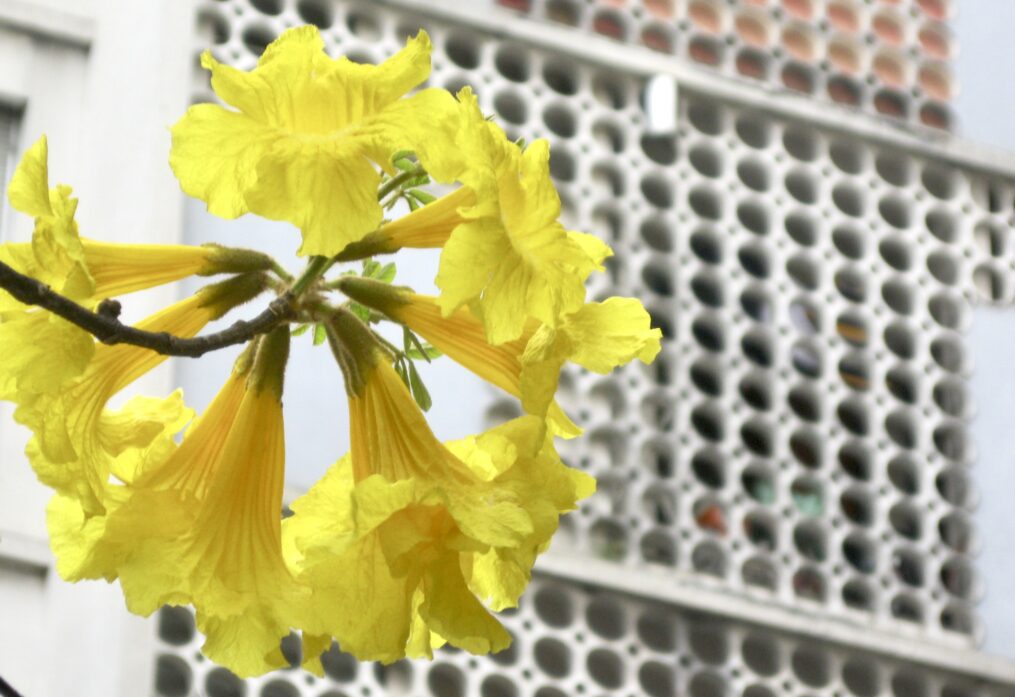
A very large crowd spread their cloaks on the road, while others cut branches from the trees and spread them on the road. The crowds that went ahead of him and those that followed shouted,
“Hosanna to the Son of David!”
“Blessed is he who comes in the name of the Lord!”
“Hosanna in the highest heaven!” Matthew 21:8-9
“What shall I do, then, with Jesus who is called the Messiah?” Pilate asked.
They all answered, “Crucify him!” Matthew 27:22
We are at the final leg of the season of Lent. Everything comes together during Holy Week. Well, from another perspective, we can say everything falls apart this week culminating in the crucifixion of our Lord. Of course, we know what is coming up after this. However, we need to hold off on the ending for now and focus on the path to the Cross. It is an important path for us to walk on this week. It is a time of coming to terms with our humanity.
We begin Lent with the reminder of our mortality. We heard the words;
For dust you are,
And to dust you shall return.
This verse is from Genesis 3:19. In the context of this verse, we learn that these words are not a mere reminder of our mortality but of sin. Our mortality was never part of God’s plan. Our souls bear witness to this Truth. We were not meant to die. This is why we resist the idea of death so strongly. Death is present in our lives because of sin. There is what I consider an unhealthy attitude towards our mortality. I believe that it goes against our Christian spirituality. In my experience, this attitude is more common among those of a privileged background who can afford to distance themselves from any remembrance of death. They avoid all talk and mention of our mortality. They think any mention of death is morbid and weird.
I belong to a generation and a social class where funerals were part and parcel of my childhood. I never was traumatized. I am glad that my parents did not shelter me from this aspect of life. It has helped me grow in my spirituality. Facing our mortality is important because it makes us reflect on the seriousness of sin. Death is not a punishment but it is a protection from sin. Can you imagine a world where people can live their sinful ways without any restriction? Death is ultimate restriction against sin. It stops us from further propagating sin.
The concept of sin has been abused and spoken of in a way which is hypocritical and meaningless. Nevertheless, we need to talk about it in order to liberate ourselves from it. It should not be spoken of in a way to manipulate or instill fear in people. The essential message of the gospel is liberation from sin.
Despite all its abuses, we cannot refrain from talking about sin. It is an important word. It is a word which best describes our disconnection with existence. It is the word which best describes why we find it hard to comprehend God. It is the best word to describe the dilemma we, as humans, confront in the very fundamental depth of our souls. This dilemma is well expressed in the liturgy of Palm Sunday.
There was no hypocrisy in the joyous reception of Jesus into the city of Jerusalem. The people were genuinely excited to welcome a King who was so different from all the kings they had known in their lives. Jesus was a King who rode into the city on a donkey, the humble animal of the common people. The manner that Jesus entered the city revealed something important to the people. Jesus was not a common politician. Politicians, in Jesus’ time, did not need the approval of the people. They distanced themselves from the people and ruled with an iron fist. They were afraid of the people because they incurred such hatred amongst them. Jesus rode fearlessly among the people because He loved them. The people sensed His love and saw His love in actions. Jesus was not a revolutionist. Today we have a romanticized idea of revolutionaries. However, violence generates violence. Usually the people who suffered the main bulk of this violence were the common people even though revolutionists often fight to improve the conditions of these. We can see this acting out today in the world we live. Jesus was not a revolutionist, at least not in the traditional sense. There are preachers and theologians who would like to force Jesus into one of these molds. Don’t get me wrong. Jesus was political and he was a revolutionist but it was radically different in nature from the politics of this world. The Cross reveals this to us. No revolutionist nor politician willingly goes to the Cross.
The common people of first century suffered the consequences of failed revolutions and corrupt politics. They did not need one more to add to their plight. They wanted someone who would help them see something beyond what was presented before them. They wanted to reach a higher ground. They wanted a glimpse of something to help them reconnect with a reality beyond their grasp. In Jesus, they saw a King who would guide them to a place where their deepest yearnings would be satisfied. He was their Pastor. He was their Good Shepherd.
Just a caveat, they were not looking for pie in the sky. These people were pragmatic people. They did not expect an easier life. They wanted a meaningful Life. They saw this King on a donkey and they saw Life in Him. The kind of Life which gives them treasures that will never rust nor be stolen. They followed Him because their hearts were burning with Hope of knowing that God has finally remembered them.
For I do not do the good I want, but the evil I do not want is what I do. Now if I do what I do not want, it is no longer I that do it, but sin that dwells within me. Romans 7:19-20
The problem with Jesus is that He did not come into our existence to change what is outside of us. He came to transform what is within us. The Pharisees wanted to change the outward nature of things even though, to be fair to them, this religious sect started out with good and holy intentions. Unfortunately, they needed someone to reveal to them that the problem is deep in our souls. The apostle, St Paul, being a former Pharisee, discovered this Truth after his personal encounter with our Lord. The problem is within. Sin is found in the depth of our soul preventing us from doing the good which we were made to do. God created us to be agents of His goodness. In our souls, we know that we will be the happiest when we do good. The presence of Jesus stirred the souls of the people to live out their true vocation as agents of God’s goodness.
Unfortunately, there is also something within us which hinders us. St Paul rightfully identifies this something as sin.
St Paul is not talking about sins in the plural which is something which many preachers and churches like to talk about. They highlight particular sins and forget about the ones which concerns them. This is how Pharisees talked about sin. However, our spirituality must exceed that of the Pharisees. We need to confront the sin in the singular which plagues all of us in the depth of our souls. The sin that hinders from doing the good that we want to do.
I recently read a sermon by Austin Farrer, the priest and confidant of C.S. Lewis, and I found his insight on the nature of sin to be worthy of Holy Week reflection.
“For my sin is not what I think about myself, it is what I do to God.”
The story of the Fall in the book of Genesis begins with an idea. It wasn’t about being disobedient but the impulse to eat the forbidden fruit was to become like god. Sin is removing God from our lives. Consequently, our reconciliation with God is giving Him back His true place in our souls. There is no middle ground. In fact, most ancient religions that withstood the test of time have come to this conclusion. God has to have the ultimate and exclusive place in our lives. However, these religions differ on how to achieve this. In our Christian faith, we see the answer in the person of Jesus. He came into Jerusalem as a King who was a servant. He was a King who lived His life in service to those who were considered weak and unworthy. He is the Lord who showed them how to live their lives in complete communion with God where the Father has a rightful place in the soul of Jesus. In ancient times, kings were not just mere authoritative figures. Kings were also the moral compass of life. Kings showed the people how to fashion their lives after themselves. The King of King showed the people then and now how to live their lives in complete reconciliation with God, giving us power to overcome the dominion of sin in our lives. Unfortunately, the people chose to allow sin to dominate them. Their enthusiasm for the King diminished and they allowed sin to dominate their actions.
Religious enthusiasm is good but it is not enough. Just because we are excited about all things religious and holy doesn’t make us followers of Christ. The joyous welcome of Jesus was genuine and so was the hateful cries to crucify Him. These were the same people of Jerusalem. They did not want to confront the sin in their souls. They did not want Jesus to be their absolute King in their souls. They would rather that the world outside them change without they themselves being transformed by the Love of God within their souls. Outward religious enthusiasm, as sincere as it might seem, still put Jesus on the Cross. We need transformation in our souls. We need to follow Jesus and take up our Cross.